
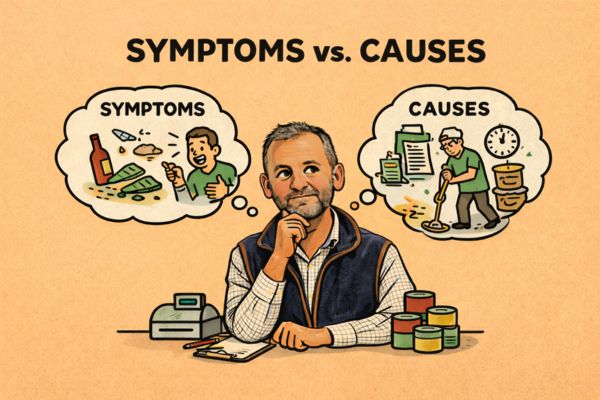
Impact Retail Tip of the Week #13: What’s really causing the problem?
I see these situations in shops all the time.
Footfall feels down, so prices get nudged.
Team aren’t performing, so more rules get introduced.
Margins are tight, so the owner works more hours.
On the surface, those reactions make sense.
But very often, they’re responses to the symptom, not the cause.
In most retail businesses, the real challenge isn’t a lack of effort or ideas.
It’s that decisions are being made inside the problem rather than stepping back to understand it.
When you’re on the shop floor all day, it’s easy to mistake urgency for importance.
Here’s something practical to try this week.
When a problem shows up in your shop, pause and ask:
“What would need to be true for this not to be a problem anymore?”
That question forces you to look beyond the immediate issue and towards what’s actually driving it.
For example:
If customers are hesitating at the counter, is it price - or confidence in the offer?
If staff are inconsistent, is it attitude - or clarity of expectations?
If sales are lumpy, is it demand - or how the range is being presented?
Different answers lead to very different actions.
This is why thinking time matters.
Not as a luxury, but as part of running a better business.
It’s also what the Impact Retail Success Club is designed to support - helping owners step back from the noise of the day-to-day and make clearer decisions.
If what’s happening in your shop feels familiar, it might be time to change the question before changing the tactic.
Food for thought.
Have a great day,
Mark
