Do You Have a Scorecard for Your Retail Business?
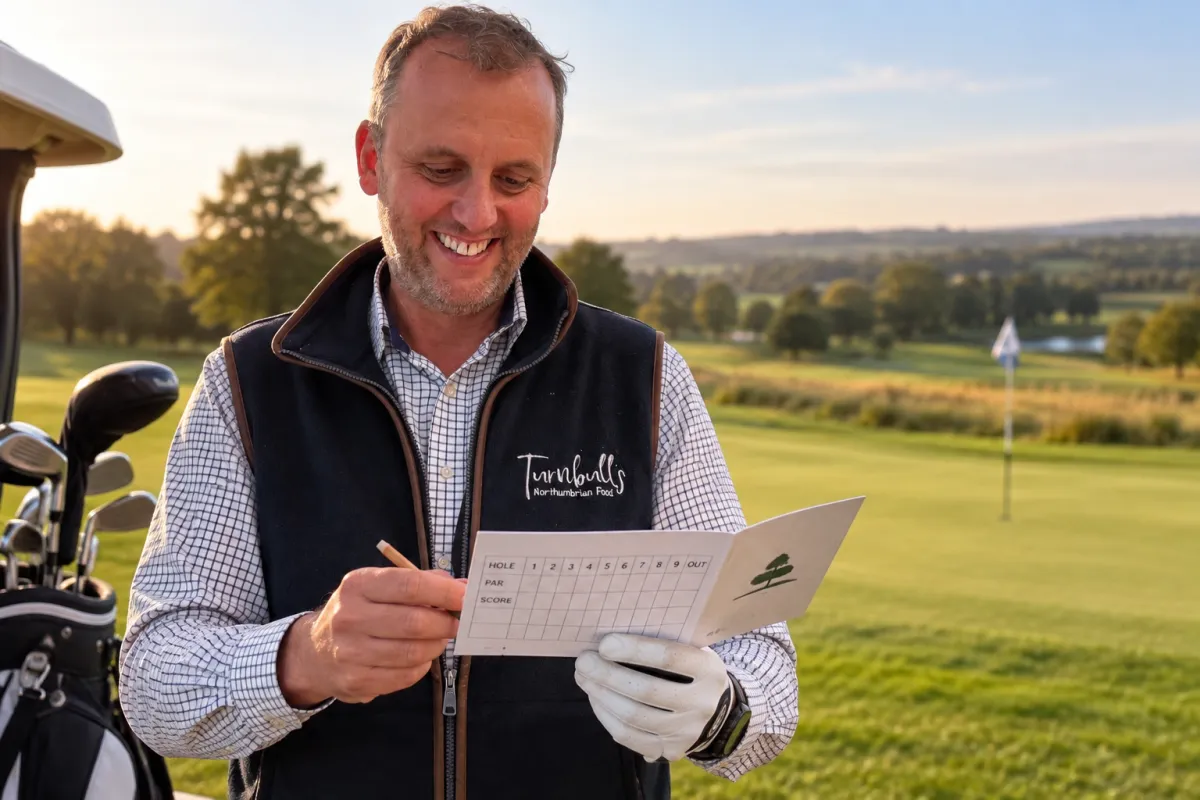
I’m in Majorca this week, enjoying a few days away from the business and playing a bit of golf.
Taking proper time away is important. It gives you a chance to switch off, recharge the batteries and hopefully come back with a clearer head.
But walking around the golf course with a scorecard in my pocket got me thinking about something every butcher, farm shop and independent retailer should have in their business.
A scorecard.
You wouldn't play golf without keeping score
Every time I play golf, I keep score.
Sometimes I wish I hadn’t... but that’s another story!
Without that scorecard, though, how would I really know how I’d played?
I might have a gut feeling. I’ll certainly remember the couple of great holes and I’ll probably try to forget the one where I visited every bunker on the course.
But the scorecard doesn’t care about my selective memory.
It tells me exactly how I performed.
And your business is no different.
A busy shop doesn't necessarily mean a better business
You can finish a Saturday absolutely shattered and think:
That was a great day.
The shop seemed busy. Customers were coming through the door. The tills were ringing and your team barely stopped.
But what do the numbers actually say?
How many customer transactions did you have?
What was your average customer spend?
How many items were customers putting into their baskets?
How do those numbers compare with last week, last month or the same period last year?
If you can't answer those questions, you're relying largely on gut feel.
And while gut instinct has its place in business, it's very difficult to deliberately improve a number you aren't measuring.
What should be on your retail scorecard?
You can measure hundreds of things in a retail business, but that doesn't mean you should.
I'd start with a few numbers that actually tell you something useful.
Customer transactions tell you how many purchases you're putting through the till. Are customer numbers growing, falling or staying roughly the same?
Average transaction value tells you how much each customer is spending. If you can increase that without needing another person through the door, it can make a significant difference.
Average basket size helps you understand how many products customers are buying. Are they coming in for one thing, or are your displays, promotions and team's selling skills encouraging them to buy two, three or four?
Once you start tracking those numbers consistently, you have something incredibly useful.
A starting point.
Now you can try to beat the score
This is where measuring becomes valuable.
You can set a target.
You can run a promotion.
You can change a display.
You can work with your team on suggesting an additional product.
And rather than saying, “I think that worked quite well,” you can look at your scorecard and find out.
Did customer numbers increase?
Did average spend move?
Did customers put more items in their baskets?
Now you're not guessing. You're learning what actually works in your business.
That's why members of the Impact Retail Success Club get quarterly tracking sheets to record these numbers. I want them to be able to look back, compare their performance and identify where the next opportunity might be.
So, what's the score in your business?
Here's the question I'd leave you with.
If I walked into your business tomorrow and asked to see your scorecard, could you show me one?
If not, don't make it complicated.
Pick a handful of important numbers and start tracking them consistently.
Because I can't improve my golf handicap if I don't know what I'm shooting.
And you'll find it pretty difficult to deliberately improve your retail business if you don't know what you're scoring either.
